
By Total Wellness Healthcare Clinic
Introduction
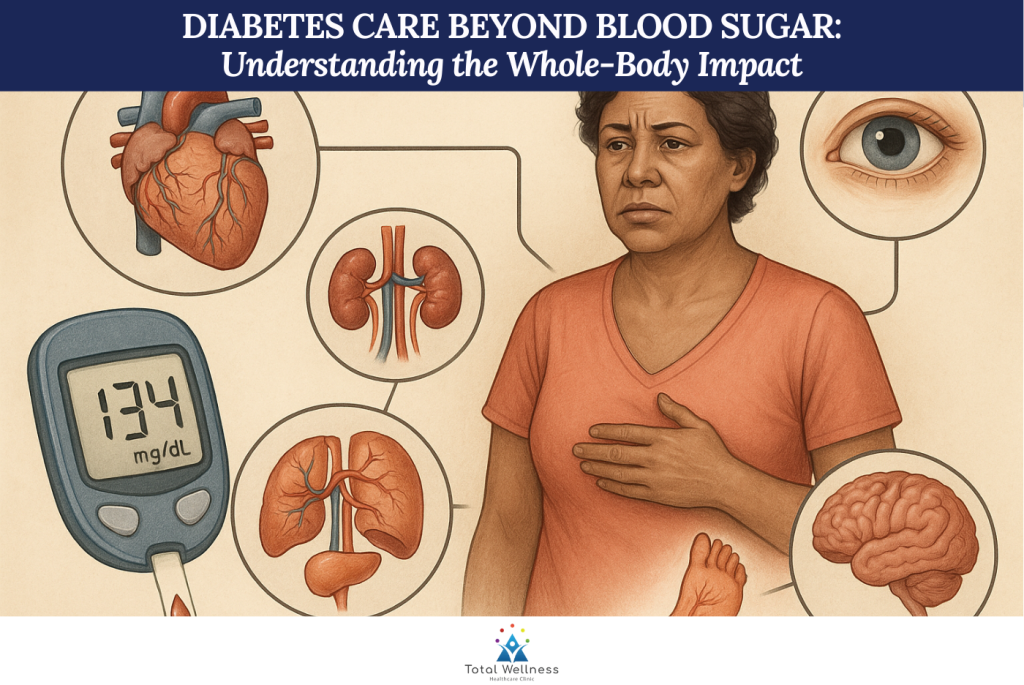
Diabetes is often seen as a “blood sugar problem,” but the truth runs deeper. This chronic condition affects nearly every system of the body—heart, kidneys, nerves, eyes, and even mental health. At Total Wellness Healthcare Clinic, we approach diabetes care as a whole-body challenge, focusing not only on glucose control but also on long-term wellness and prevention of complications.
How Diabetes Affects the Whole Body
1. Cardiovascular System
High blood sugar damages blood vessels and increases the risk of heart disease, stroke, and hypertension. Regular cardiovascular screenings and lifestyle support are critical.
2. Kidneys
Diabetes is a leading cause of chronic kidney disease. Monitoring kidney function through simple lab tests helps detect early changes and prevent serious complications.
3. Nerves and Circulation
Peripheral neuropathy (nerve damage) can cause numbness, tingling, or pain—especially in the feet. Good blood sugar control, exercise, and regular foot exams are key.
4. Eyes
Diabetic retinopathy can lead to vision loss. Annual dilated eye exams are essential to catch changes early.
5. Mental Health
Living with diabetes can increase the risk of depression and anxiety. Comprehensive care includes mental health support and stress-management strategies.
Total Wellness Approach to Diabetes Care
At Total Wellness Healthcare Clinic, we provide:
- Personalized Nutrition Plans tailored to your lifestyle and culture
- Integrated Medical Management, including medication review and continuous glucose monitoring (CGM)
- Exercise and Lifestyle Coaching to improve insulin sensitivity and overall fitness
- Preventive Screenings for heart, kidney, nerve, and eye health
- Behavioral Health Support to help manage stress and emotional well-being
Comprehensive Q&A
Q1: Is controlling blood sugar enough to prevent complications?
A: Controlling blood sugar is vital but not sufficient. Blood pressure, cholesterol, weight management, and regular screenings are equally important for preventing complications.
Q2: How often should I see my healthcare provider?
A: Most patients benefit from a comprehensive visit every 3–6 months, but frequency may vary based on your individual plan and treatment goals.
Q3: Can lifestyle changes reduce or eliminate my need for medication?
A: In many cases, yes. Weight management, a balanced diet, and regular activity can improve insulin sensitivity and may allow for reduced medication under medical supervision.
Q4: What is continuous glucose monitoring (CGM) and do I need it?
A: CGM uses a small sensor to measure glucose levels throughout the day and night, providing detailed insight to help you and your provider make timely adjustments. It’s particularly helpful for those on insulin or with fluctuating glucose levels.
Q5: How can I protect my kidneys and eyes?
A: Keep your A1C, blood pressure, and cholesterol in target range, avoid smoking, and schedule annual eye exams and kidney function tests.
Q6: Does stress affect blood sugar?
A: Yes. Stress hormones like cortisol can raise blood sugar. Incorporating mindfulness, regular physical activity, and adequate sleep is an important part of care.
Take Control of Your Whole-Body Health
Diabetes management is about much more than numbers on a meter. With proactive, integrative care, you can protect your heart, kidneys, eyes, nerves, and mental health. Total Wellness Healthcare Clinic is here to help every step of the way.
Contact Total Wellness Healthcare Clinic
Upper Marlboro Office
9500 Marlboro Pike, Suite 12
Upper Marlboro, MD 20772
Phone: (301) 494-1006
Waldorf Office
605 Post Office Rd Ste 101
Waldorf, MD 20602
Phone: (301) 494-1006
Visit us today to schedule a comprehensive diabetes evaluation and begin your journey to whole-body wellness.