
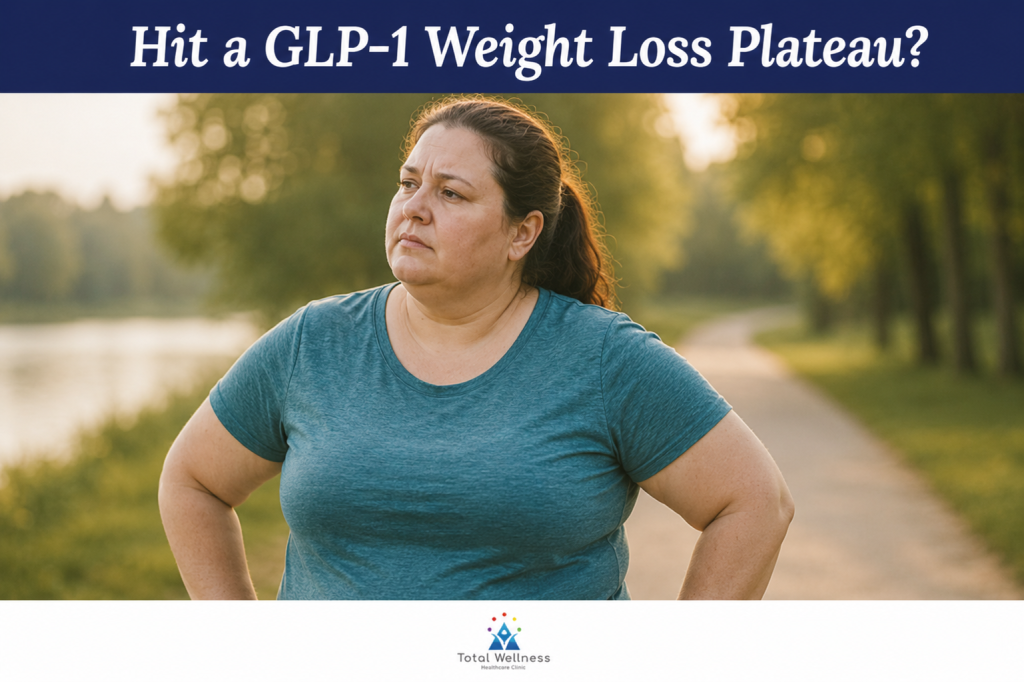
Hit a GLP-1 Weight Loss Plateau?
Here’s What Might Be Going On
If you’ve been taking a GLP-1 medication such as Wegovy®, Zepbound®, Ozempic®, or Mounjaro® and the scale has suddenly stopped moving, you’re not alone.
Many patients experience impressive weight loss during the first several months of treatment, only to find themselves frustrated when progress slows or appears to stop altogether. While this can be discouraging, a weight loss plateau does not necessarily mean your medication has stopped working or that you’ve done something wrong.
In fact, plateaus are a normal part of the weight loss journey. Understanding why they happen can help you make the right adjustments and continue moving toward your goals. Research shows that weight loss on GLP-1 medications is rarely a straight line, and many factors can contribute to periods of slower progress.
What Is a Weight Loss Plateau?
A weight loss plateau occurs when your weight remains relatively stable for several weeks despite continuing your treatment plan.
During the early stages of GLP-1 therapy, many people experience rapid weight loss due to reduced appetite, improved portion control, and healthier eating habits. As your body adapts, however, the rate of weight loss often slows.
This is not necessarily a sign of failure. In many cases, it’s simply your body’s natural response to carrying less weight and requiring fewer calories than before.
Common Reasons You May Be Stuck
Several factors can contribute to a plateau while taking GLP-1 medications.
1. Your Body Now Needs Fewer Calories
As you lose weight, your body becomes more efficient. A person who weighs 180 pounds generally burns fewer calories than when they weighed 230 pounds. This means the calorie deficit that initially drove weight loss may become smaller over time. Even if your habits haven’t changed, your body may simply require fewer calories to maintain its current weight.
2. You’re Losing Muscle Along With Fat
One overlooked challenge of GLP-1 treatment is that some weight loss may come from lean muscle mass rather than fat alone. Muscle helps support a healthy metabolism. When muscle mass decreases, calorie burning can decrease as well, making continued weight loss more difficult. Research suggests that preserving muscle through adequate protein intake and strength training is important for long-term success.
3. Protein Intake Has Dropped Too Low
GLP-1 medications reduce appetite, which can make it difficult to eat enough protein. Many patients unintentionally focus on eating less rather than eating strategically. Without sufficient protein, the body may struggle to preserve muscle mass and support ongoing fat loss. Protein becomes even more important during weight loss than many people realize.
4. Lifestyle Habits Have Drifted
When patients first start a weight loss program, they often pay close attention to nutrition, hydration, exercise, and sleep. Over time, small habits can gradually change. A few extra snacks, less physical activity, inconsistent meal planning, poor sleep, or increased stress can all affect progress. Studies have shown that even intermittent lapses in dietary adherence can contribute to plateaus.
Signs Your Plateau May Need Attention
A temporary slowdown is normal. However, it may be worth speaking with your provider if:
- Your weight has remained unchanged for more than 4-8 weeks.
- Hunger and cravings have noticeably increased.
- You feel significantly less satisfied after meals.
- Your physical activity has decreased.
- You are experiencing medication side effects that limit nutrition or exercise.
- You are unsure whether your current dose is still appropriate.
An experienced weight loss healthcare provider such as Dr. Yetunde Sannoh can help determine the cause and whether adjustments to your nutrition plan, exercise routine, medication dosing, or overall strategy are needed.
How to Break Through a GLP-1 Plateau
The good news is that many plateaus can be overcome with targeted changes.
Instead of focusing solely on eating less, consider strengthening the habits that support healthy body composition and long-term weight management. Experts commonly recommend:
- Increasing daily protein intake
- Incorporating resistance or strength training
- Improving hydration
- Prioritizing quality sleep
- Managing stress levels
- Tracking food intake more consistently
- Reviewing medication dosing with your provider
- Measuring body composition, not just scale weight
These strategies can help preserve muscle mass, improve metabolism, and create new momentum in your weight loss journey.
Remember: Progress Isn’t Always Measured by the Scale
One of the biggest mistakes people make is assuming that weight is the only measure of success.
During a plateau, you may still be experiencing meaningful improvements in your health, including:
- Reduced blood sugar levels
- Improved blood pressure
- Better energy
- Increased mobility
- Smaller clothing sizes
- Improved body composition
- Better sleep quality
Sometimes the scale pauses while other important health improvements continue.
The Bottom Line
A GLP-1 weight loss plateau can feel frustrating, but it is often a normal part of the process rather than a sign that treatment has failed. Your body adapts as you lose weight, and continued success may require adjustments to nutrition, physical activity, protein intake, or medication management.
At Total Wellness Healthcare Clinic, Dr. Yetunde Sannoh and her experienced team believe weight loss should be personalized, medically supervised, and focused on long-term health, not just short-term numbers on a scale. If your progress has stalled, our team can help identify what’s contributing to the plateau and develop a strategy to get you moving forward again.
Ready to Take the Next Step?
If you’ve hit a weight loss plateau or want to learn whether GLP-1 therapy may be right for you, contact Total Wellness Healthcare Clinic today. Together, we can create a personalized plan designed to help you achieve sustainable, lasting results.
Call to Action
References:
- National Institutes of Health. Weight Reduction with GLP-1 Agonists and Paths for Future Therapy.
- StatPearls. Management of Weight Loss Plateau.
- NIH. GLP-1 Agonists and Exercise: The Future of Lifestyle Prioritization.
- Medical News Today. Study Finds Keys to Minimize Muscle Loss from GLP-1 Drugs.
- Associated Press. Healthy Habits Remain Key with GLP-1 Medications.